Two rugged side rails, welded rungs, maximum airflow — the specification of choice for heavy power feeders and long spans.
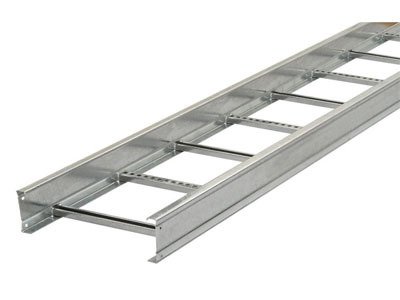
A ladder tray is the load-carrying backbone of industrial cable management: two formed side channels joined by welded rungs at fixed intervals. With most of the tray open, heat from heavily loaded power cables escapes freely, allowing higher sustained current ratings than enclosed systems.
The rung construction is also the installer's friend. Cables can be pulled, dressed and clamped from above or below, and every rung is a ready anchor point for ties on risers and vertical runs where cable position must be held.
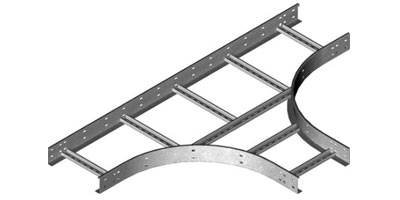
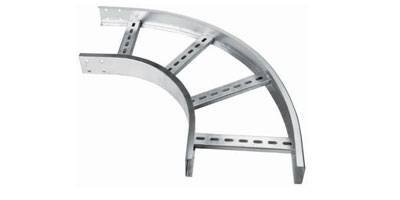
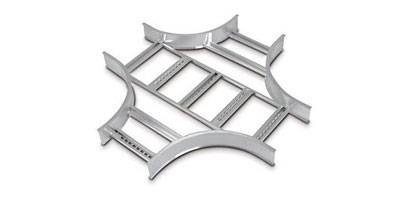
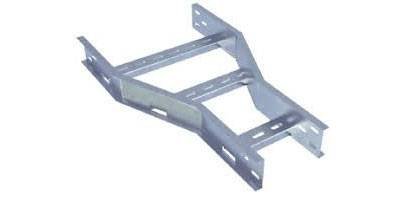
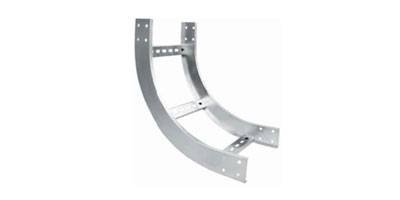
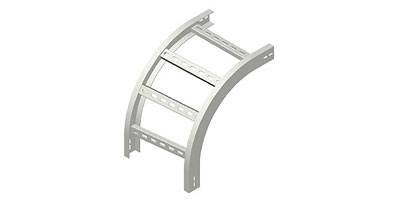
Metal Hub ladder trays are press-formed and welded in-house in widths from 150 to 1200 mm with runner heights from 50 to 150 mm, rung spacing of 250 or 300 mm, and sheet thickness from 1.6 to 3.0 mm — with the full accessory family of bends, tees, crosses and reducers manufactured to match.
| Parameter | Range |
|---|---|
| Width | 150 – 1200 mm |
| Runner height | 50 – 150 mm |
| Runner collar | 12 – 45 mm |
| Rung sections | 35×15, 40×20, 50×20 mm |
| Rung spacing | 250 mm or 300 mm |
| Sheet thickness | 1.6 – 3.0 mm |
| Standard lengths | 2500 mm / 3000 mm |
| Materials | Mild steel, GI sheet, SS, aluminium |
| Finishes | Hot-dip galvanized, pre-galvanized, powder-coated |
All fittings are factory-made in the same material and finish as the straight lengths.
| Fitting | Purpose |
|---|---|
| Horizontal bends (30/45/60/90°) | Direction changes in plan |
| Vertical inner / outer bends | Level changes up or down |
| Tees and crosses | Branching the route |
| Reducers (right / centre) | Width transitions |
| Coupler plates & hardware | Joint strength and earth continuity |
| Parameter | Ladder tray | Perforated tray |
|---|---|---|
| Heavy power feeders | Best | Good |
| Small / control cables | Needs closer support | Best |
| Heat dissipation | Maximum | Good |
| Dust and drip shielding | Lowest (add covers) | Moderate |
When the fill is dominated by large power cables — the open rung construction sheds heat best and carries the highest loads per span. Mixed fills with small control cables favour perforated trays for continuous support.
250 mm suits smaller cables that need closer support; 300 mm is the economical standard for large feeders. Both are stocked patterns on our line.
Hot-dip galvanizing after fabrication for outdoor, humid or coastal duty; pre-galvanized for dry interiors; powder-coating where colour coding or extra chemical resistance is specified.
Yes — every fitting (horizontal and vertical bends, tees, crosses, reducers) ships from the same line in the same material and finish, so routes assemble without site fabrication.
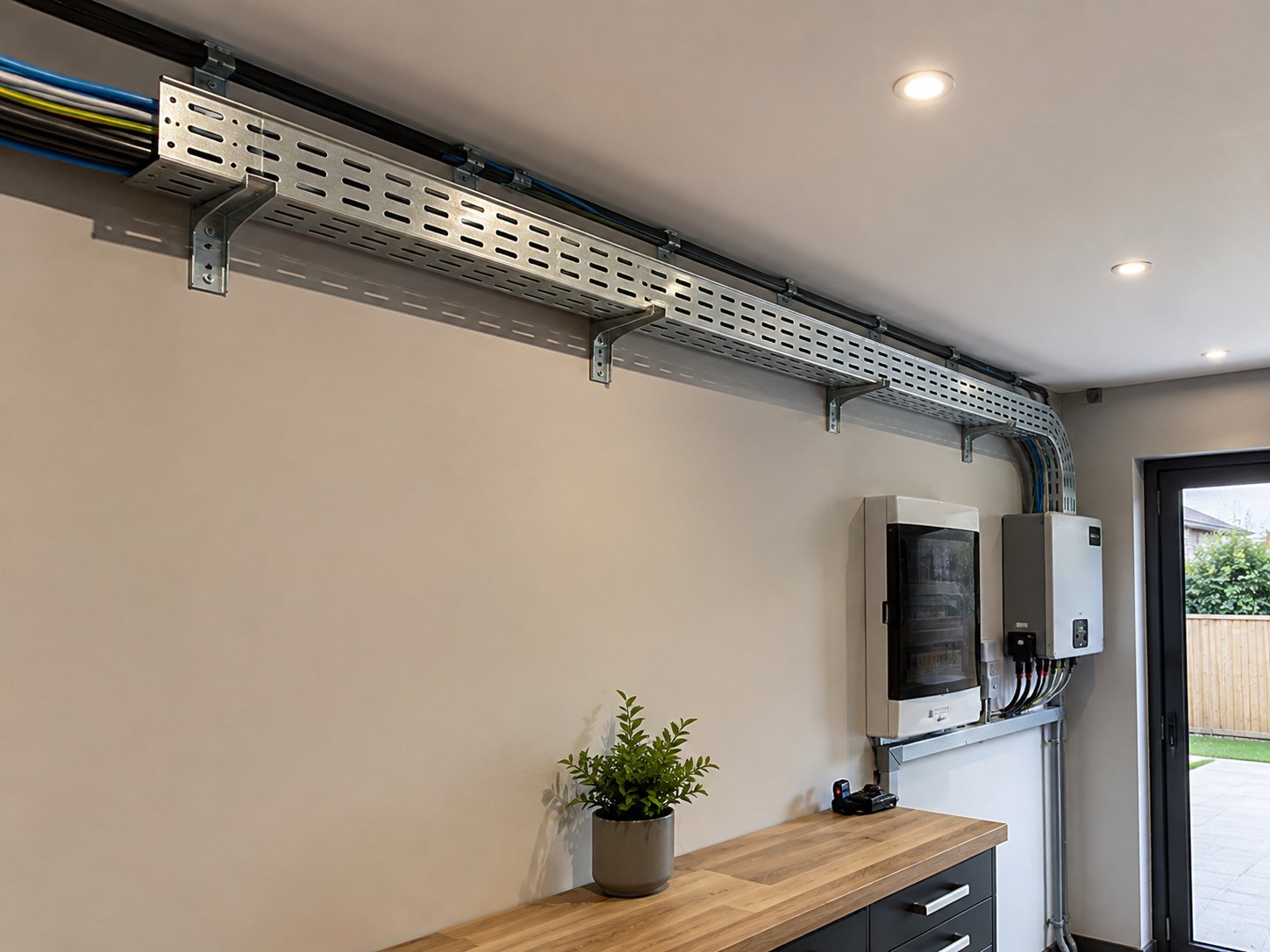
Part of the Metal Hub cable management range — manufactured on the same line, to the same specification discipline.
View Details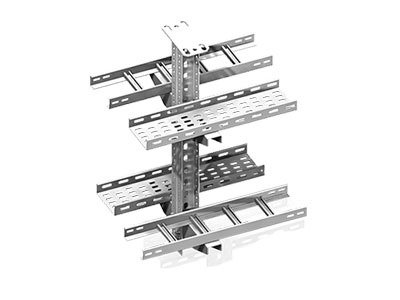
Part of the Metal Hub cable management range — manufactured on the same line, to the same specification discipline.
View Details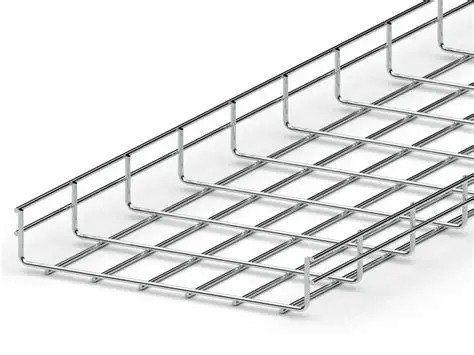
Part of the Metal Hub cable management range — manufactured on the same line, to the same specification discipline.
View DetailsSend your cable schedule and route drawing — we return sizing, spans and a quotation the same working day.