Tough, corrosion-proof FRP covers that protect your earth pit and keep inspection access simple and safe.
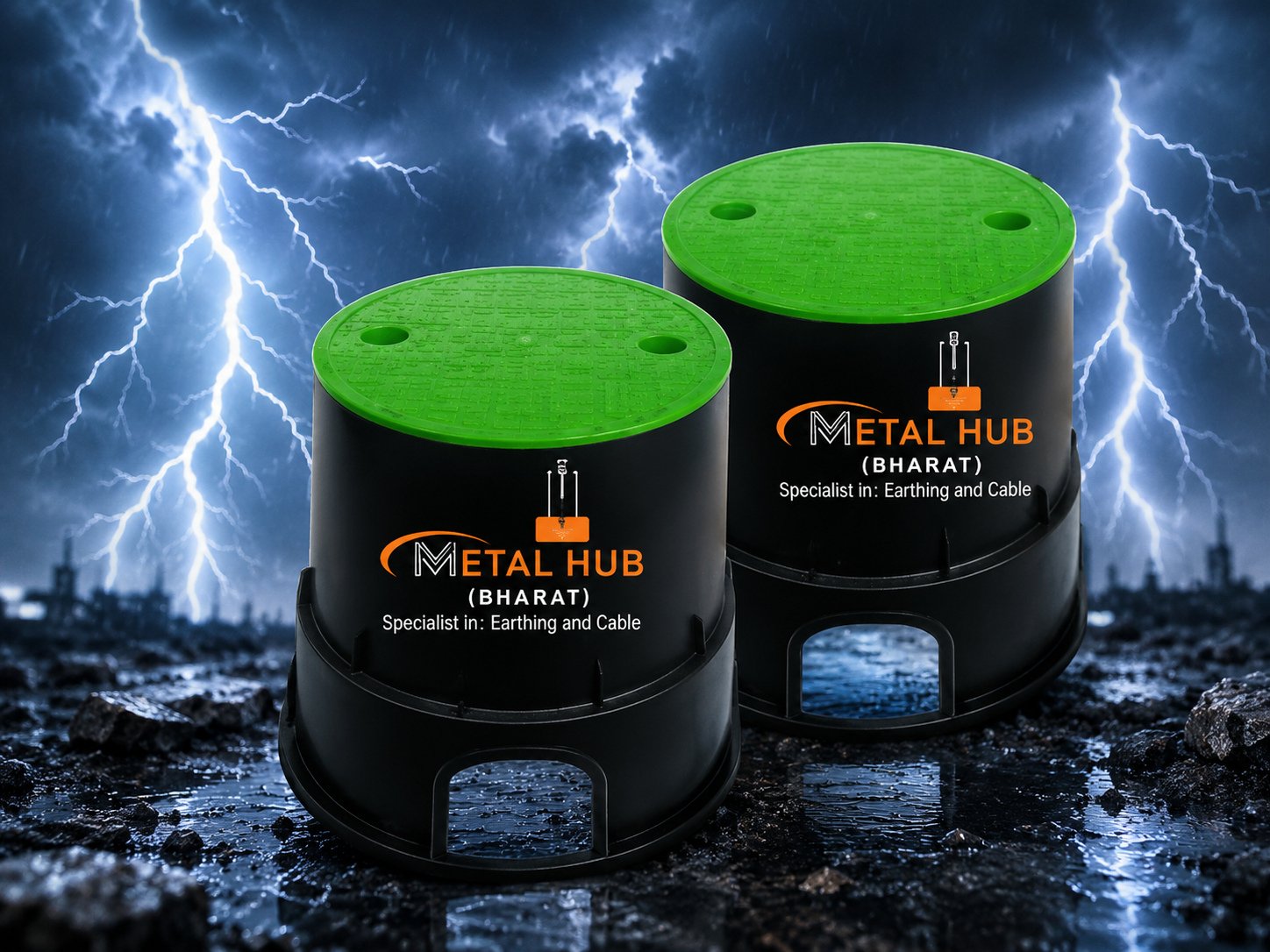
An earthing pit needs a cover that survives sun, rain and site traffic without rusting or cracking. Our FRP (Fibre Reinforced Plastic) pit covers are moulded with factory-built access holes, so resistance testing and inspection never require removing the whole cover.
Unlike cast iron, FRP never corrodes, is light enough for one person to handle, and its bright green finish makes earth pits easy to locate on any site.
| Material | FRP (Fibre Reinforced Plastic) |
|---|---|
| Shapes | Round and square |
| Standard Sizes | 250 mm, 300 mm (custom sizes on request) |
| Access | Factory-built inspection holes |
| Finish | Weather-stable green |
| Corrosion | Fully corrosion-proof |
An earth pit that cannot be found, opened and tested is an earth pit that quietly drifts out of specification. The inspection cover is therefore not civil-works trim — it is the maintenance interface of the entire earthing installation, and the reason codes of practice require earth terminations to remain accessible.
Traditional cast iron covers rust, seize, crack under impact and disappear to scrap dealers. Concrete covers crack and are heavy enough to discourage the very inspections they exist to enable. FRP (Fibre Reinforced Plastic) resolves all three failure modes: it cannot corrode, weighs a fraction of iron, has no scrap value, and its moulded ribs give load capacity that survives pedestrian and light vehicular traffic.
Metal Hub FRP covers are moulded with factory-built access holes, so routine resistance testing does not even require lifting the cover — the test lead reaches the terminal through the port. The signal-green finish is UV-stabilised and makes pit locations obvious on any site walkdown.
Being non-conductive, FRP also adds a passive safety layer: a person standing on the cover during a fault event is insulated from the terminal below — a small but genuine touch-potential benefit that metal covers cannot offer.
Good to know: Count your pits before ordering: every electrode, every strip test point and every lightning down-conductor termination should have its own identifiable, openable cover.
The cover's rib geometry distributes point loads across the frame seat, which is why a lightweight moulding carries footfall and light vehicles without cracking. The recessed handle profile avoids trip hazards while still allowing one-person lifting, and the access ports align with the electrode terminal position of a standard pit.
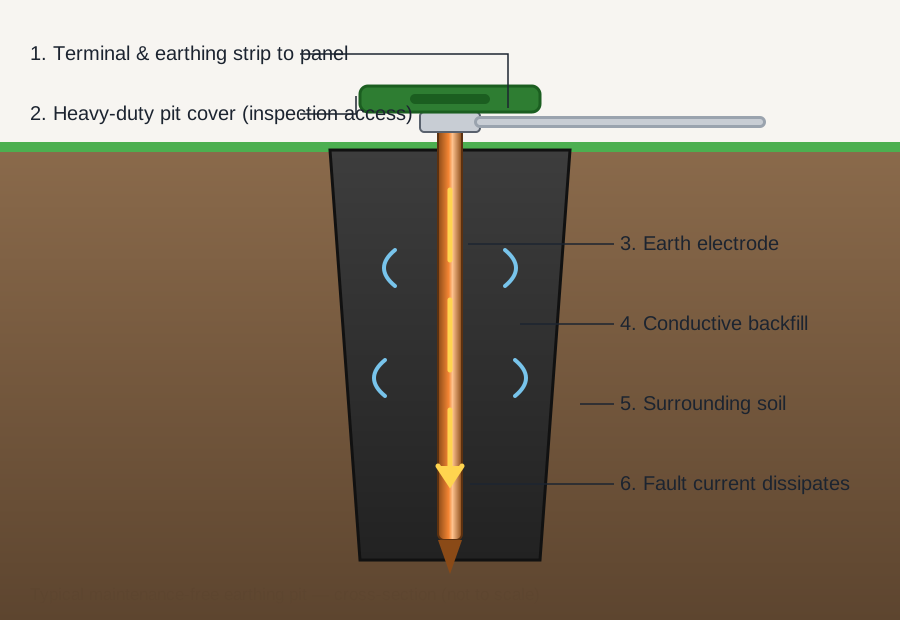
In the pit assembly, the cover closes the chamber that keeps the terminal clean, dry and reachable — the same chamber shown in the standard cross-section below.
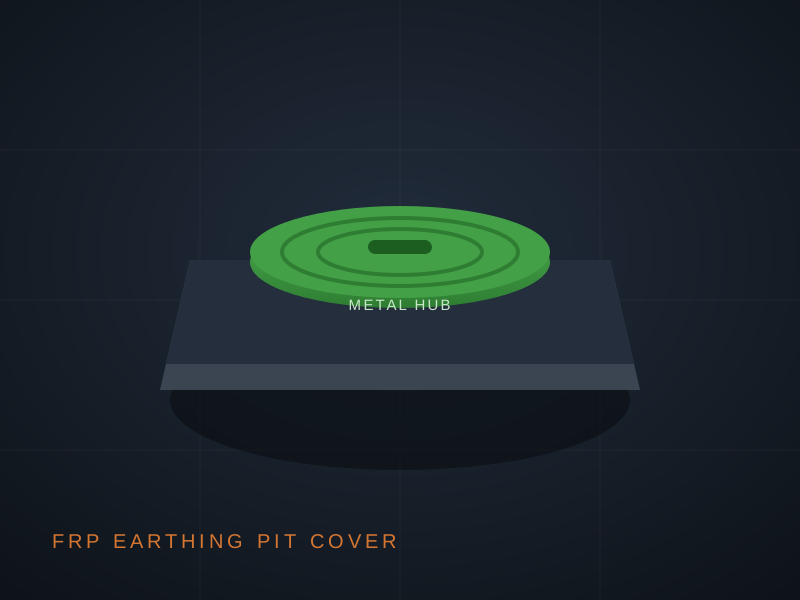
Custom sizes and duties are moulded against order.
| Nominal size | Shape | Duty | Typical placement |
|---|---|---|---|
| 250 × 250 mm | Square | Pedestrian | Building periphery, gardens |
| 300 × 300 mm | Square | Pedestrian / light vehicle | Standard electrode pits |
| 300 mm dia | Round | Pedestrian / light vehicle | Bored-pit installations |
| 450 × 450 mm | Square | Light vehicle | Substation yards, driveways |
| Property | FRP value | Why it matters |
|---|---|---|
| Corrosion | Immune — polymer matrix | No rust, no seizing, no repainting |
| Weight | ≈ 1/4 of equivalent cast iron | One-person inspection access |
| Electrical conductivity | Non-conductive | Touch-potential insulation over terminal |
| UV stability | UV-stabilised pigment | Colour and strength retained outdoors |
| Scrap value | None | Theft-proof in practice |
| Parameter | FRP | Cast iron | RCC / concrete |
|---|---|---|---|
| Corrosion resistance | Excellent | Poor — rusts and seizes | Good |
| Weight / handling | Light | Heavy | Very heavy |
| Impact behaviour | Resilient | Brittle at edges | Cracks and spalls |
| Theft risk | None | High | None |
| Identification | Moulded colour & marking | Paint (fades) | Poor |
| Pit location | Recommended cover | Note |
|---|---|---|
| Lawn / landscaped area | 250 or 300 mm pedestrian | Flush-set to mowing level |
| Paved walkway | 300 mm pedestrian / light vehicle | Bed on mortar collar |
| Driveway / yard with vehicles | 450 mm light vehicle duty | Concrete surround recommended |
| Substation earth grid test points | 300 mm with marking | Number every cover for the register |
Build a masonry or precast collar around the pit head, sized to the cover's seating flange, with the top flush to finished level.
Set the cover seat on mortar, checked level in both axes so the cover cannot rock under load.
Check the electrode terminal and clamp sit clear of the underside and remain reachable through the access port.
Finish paving or soil to the cover surface — proud covers get broken; sunken covers get buried.
Number the cover with the pit ID and enter location plus baseline resistance in the earthing register.
FRP itself is maintenance-free — no painting, no lubrication of hinges, no rust treatment. The maintenance value of the cover is what it enables: quick annual testing and visual joint inspection without excavation.
During the annual earthing test walkdown, check each cover for seating, cracks and legible identification. A cover replaced for a few hundred rupees protects an earthing investment worth many times more.
No corrosion, no theft value, a quarter of the weight, and electrical insulation over the terminal. Cast iron's only historical advantage — heavy vehicle duty — is covered by our vehicle-rated FRP mouldings for normal site traffic.
The pigment is UV-stabilised for outdoor exposure. Colour retention is functional, not cosmetic: the green marker is how future maintenance teams find your pits.
Pedestrian-duty covers are for footfall only. For driveways and yards, use the vehicle-duty size set in a concrete surround, and keep genuinely heavy traffic routed away from pit positions.
250 and 300 mm squares, 300 mm round and 450 mm square as standard, with custom sizes moulded to order — including client-specific marking.
Yes — every electrode, strip test point and down-conductor termination should be individually accessible. Shared or buried terminals are the most common reason annual testing silently stops.
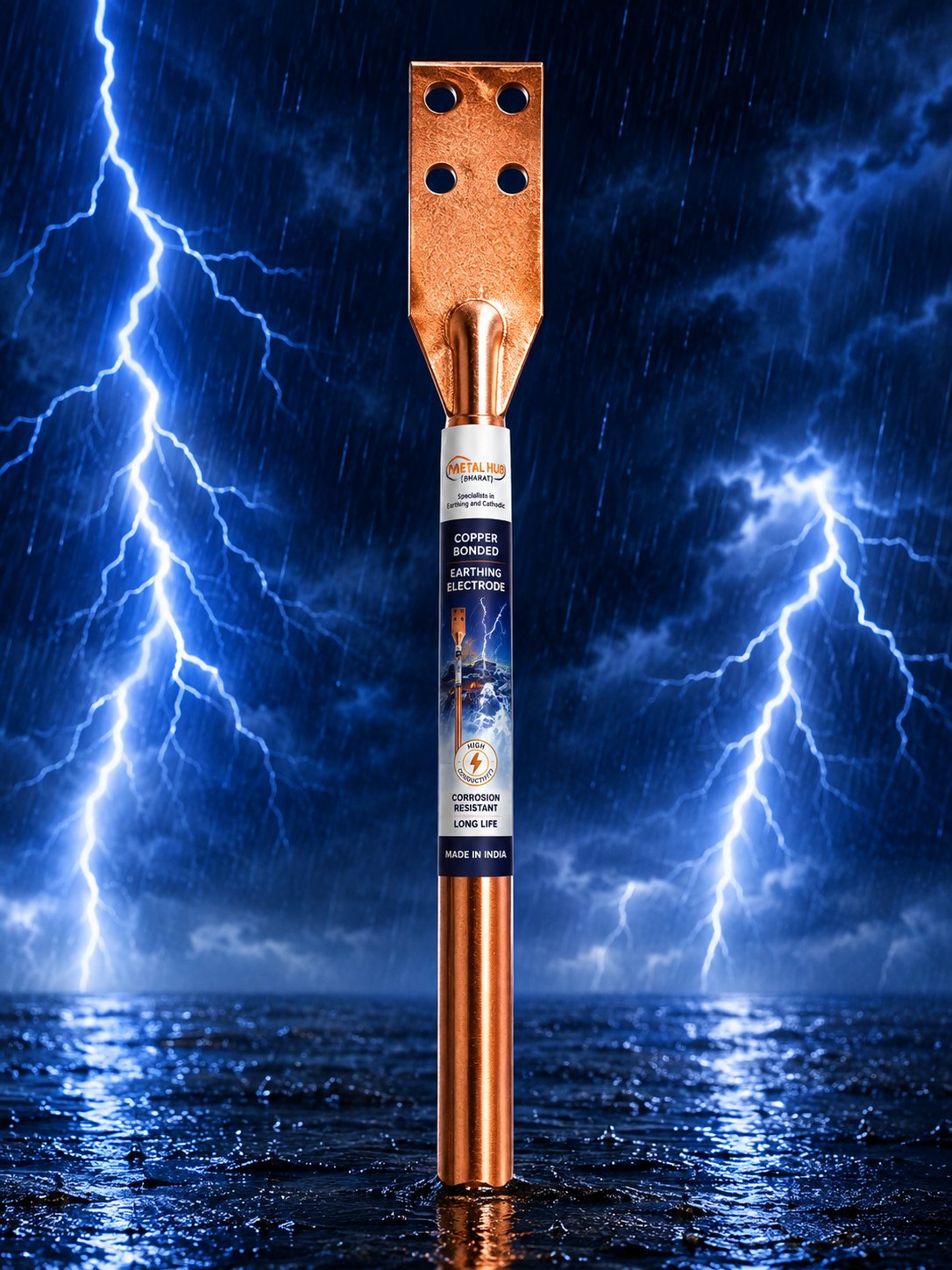
NABL & CPRI lab-tested electrodes with molecularly bonded copper coating.
View Details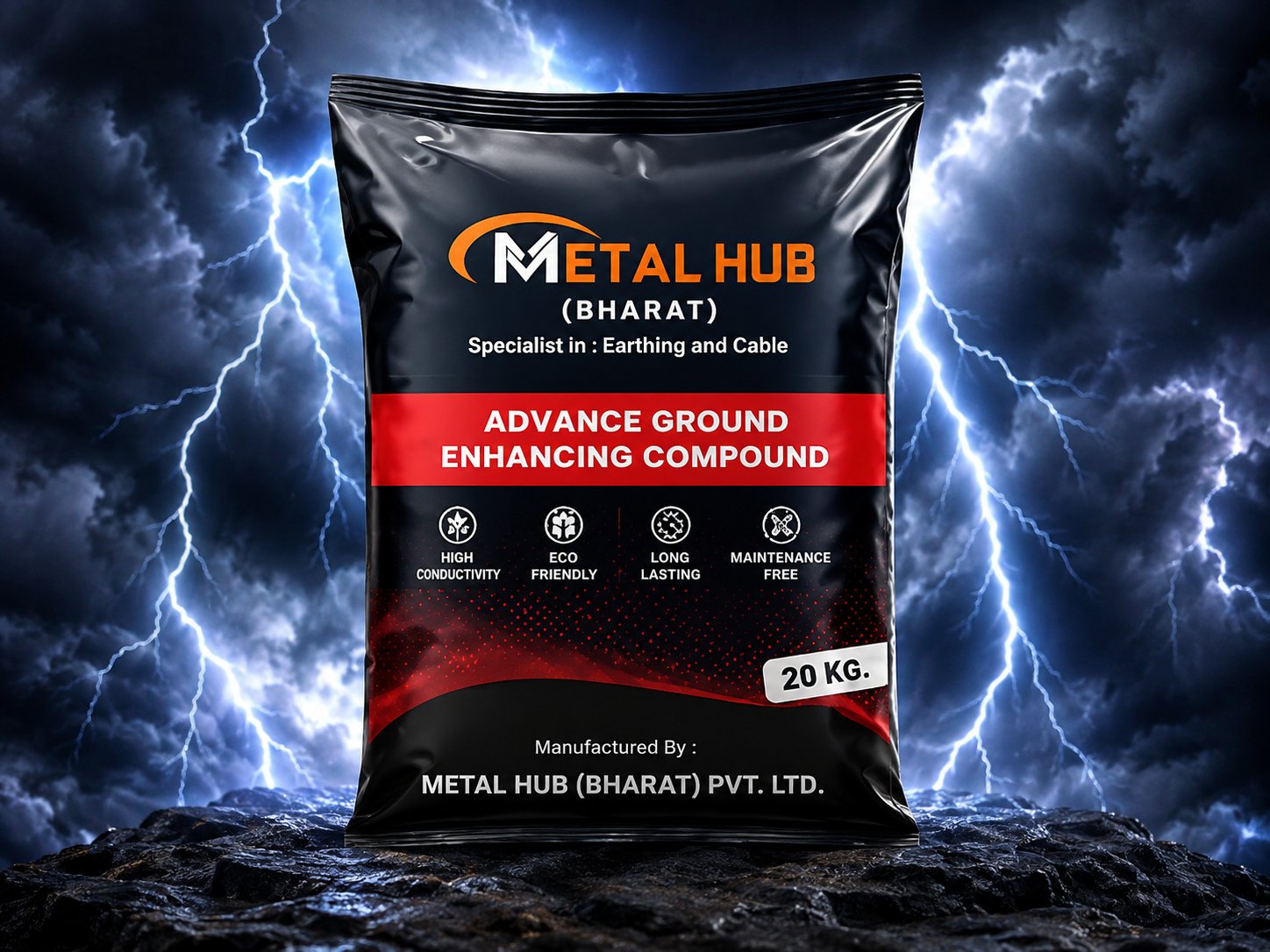
Graphite-based ground enhancing compound, resistivity below 0.2 ohm-m.
View Details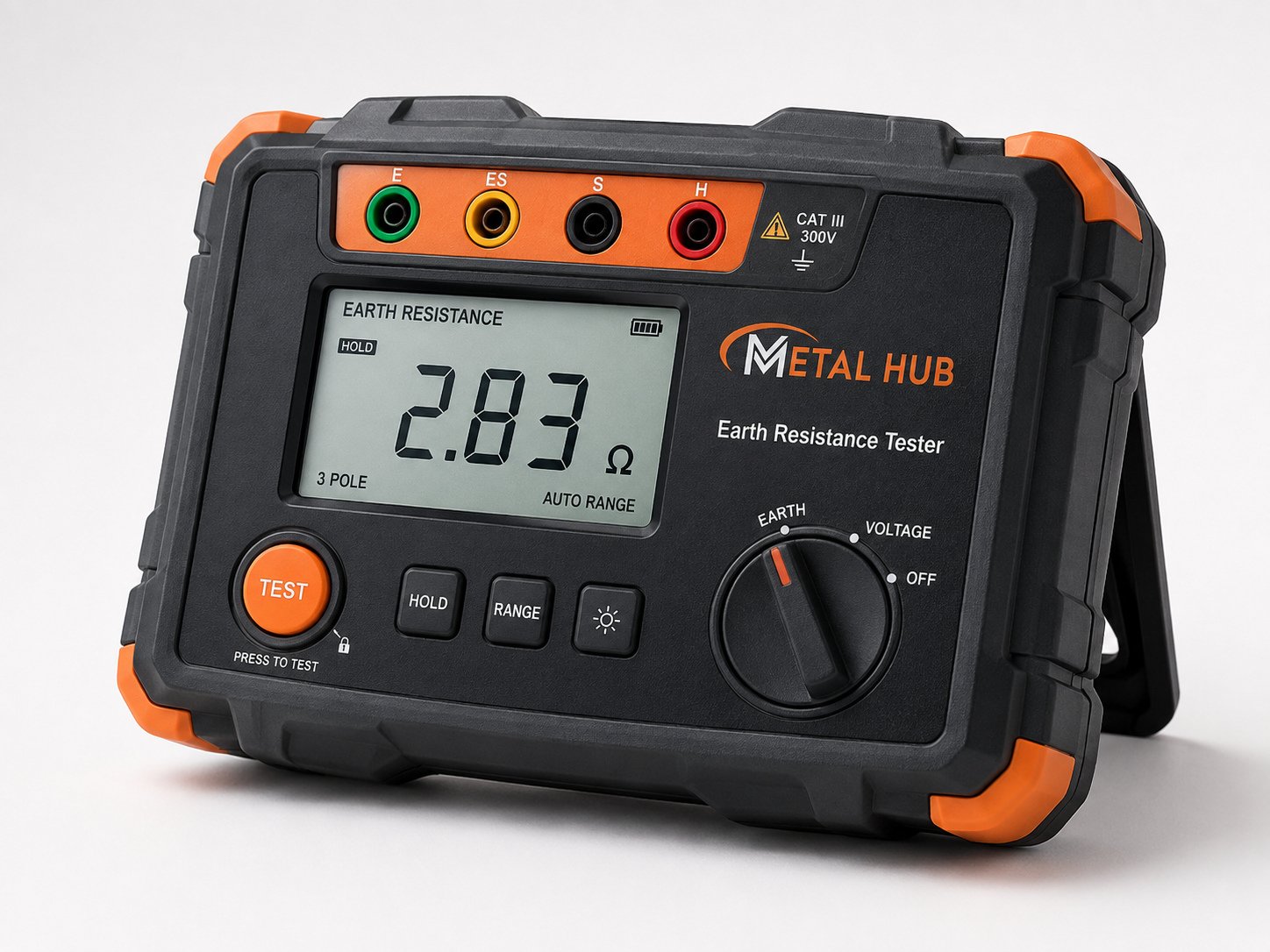
Digital measurement to verify earthing system health.
View DetailsShare sizes and quantities — we'll quote the same working day.